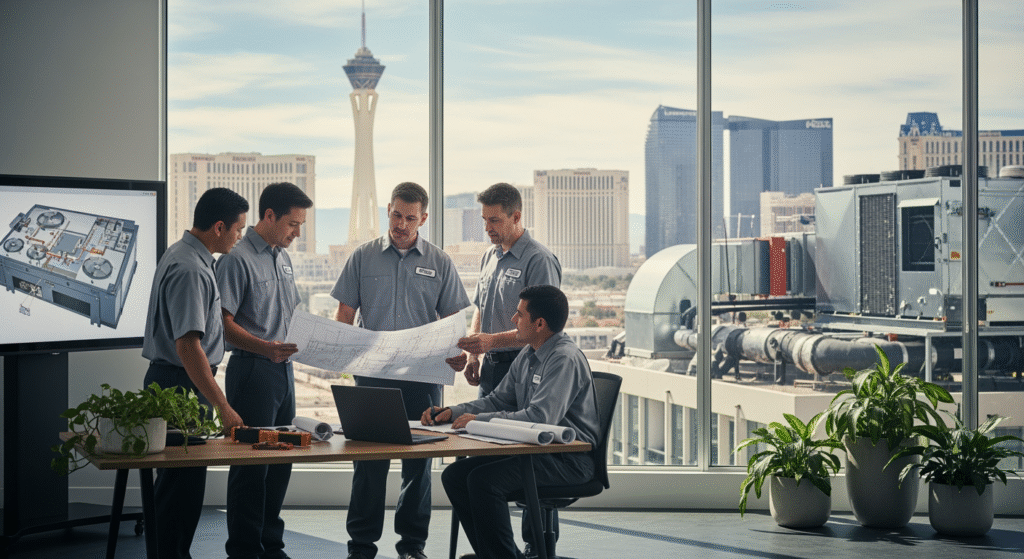
When you’re responsible for a storefront, warehouse, or multi-tenant building in Las Vegas, picking the right commercial hvac contractors Las Vegas can be the difference between smooth operations and costly downtime. I’ve worked with building owners and property managers across the valley, and I know the local factors that make commercial HVAC projects unique in this market. For a quick snapshot of regional population and growth trends that affect commercial demand, see the U.S. Census homepage for updated context on the metro area’s expansion https://www.census.gov.
Why the right contractor matters in this climate
The desert climate drives enormous cooling loads for much of the year, and that puts pressure on commercial systems. A rooftop unit failure during a peak week can shut down retail operations or disrupt manufacturing schedules. Beyond comfort, HVAC systems impact energy costs, indoor air quality, and tenant satisfaction. I’ve seen properties cut utility bills dramatically simply by addressing control strategies, sealing ductwork, and selecting equipment sized for local conditions rather than defaulting to off-the-shelf solutions.
Core services competent contractors should provide
Not all companies offering services are built for every type of commercial job. When I evaluate contractors, I look for a clear suite of commercial-grade offerings that match building needs. Expect a contractor to be able to handle:
- Design-build and system replacement for rooftop units, split systems, chillers, and packaged systems.
- Preventative maintenance contracts tailored to commercial hours and load cycles.
- Refrigeration services for restaurants, grocery stores, and cold storage facilities.
- Controls and building automation integration for energy savings and remote monitoring.
Must-have response and compliance capabilities
A quality contractor for commercial work should offer 24/7 emergency response, documentation for code compliance, and experience with local permitting. They should be able to walk you through strategies that minimize downtime—like temporary cooling or staged replacements—and explain how they will maintain regulatory compliance when it comes to refrigerants and equipment disposal.
Common warning signs your commercial system needs professional attention
Facility teams often call me only after a problem becomes obvious. The fastest path to fewer emergency calls is watching for early indicators and addressing them with a pro before they escalate. Typical red flags include persistent hot or cold zones, sudden spikes in energy use, frequent cycling, unusual noises from mechanical rooms, and failing to meet indoor air quality goals. If your building houses sensitive operations — such as server rooms, food storage, or healthcare spaces — even small failures can become urgent financial or safety issues.
How to vet and compare commercial HVAC contractors
Choosing a contractor is a mix of credentials, references, and practical fit. I recommend a short process that helps you compare apples to apples without wasting time.
- Verify local experience with commercial projects similar to yours, including rooftop unit replacements, refrigeration installations, and controls integration.
- Ask for references and visit at least one recent job to see system performance and workmanship first-hand.
- Confirm licensing, insurance, and any manufacturer certifications for equipment you plan to install.
- Request a clear proposal that includes scope, milestones, warranty, and contingency plans for surprises uncovered during work.
When proposals come in, I focus on details that show the contractor understands the building: load calculations tailored to the property, scheduling that avoids tenant disruption, and a realistic timeline that accounts for local permitting and supply chain realities. You don’t want a low bid that saves money today but creates bigger expenses a year from now.
Pricing and budgeting: what affects cost in this area
Several local factors influence price in Las Vegas. High cooling loads mean larger equipment and more robust controls; supply chain constraints can affect lead times; and permit timelines vary by jurisdiction. Other cost drivers include roof modifications for new rooftop units, custom ductwork, necessary electrical upgrades, and refrigerant type. When I prepare budgets with clients, I always include a small contingency for surprises and weigh the long-term energy savings from higher-efficiency equipment against first-cost savings.
Two trending topics shaping commercial HVAC projects now
There are a couple of trends I keep bringing up in client conversations because they directly affect project scope and lifecycle costs.
Electrification and decarbonization: Businesses are increasingly looking for ways to reduce carbon footprints and leverage incentives for high-efficiency electric equipment. This impacts equipment choices, especially for properties aiming for green certifications or lower operating costs over time.
Smart controls and predictive maintenance: Remote monitoring, IoT sensors, and analytics help owners detect degraded performance before failures occur. Contractors that offer cloud-based monitoring and predictive alerts provide measurable ROI through reduced emergency repairs and better energy management.
How contractors handle refrigerant transitions and code changes
Regulatory shifts around refrigerants and efficiency standards are real concerns for commercial buildings. A contractor should explain the implications of phasing out older refrigerants, whether your system is eligible for retrofits, and the costs and benefits of switching to newer refrigerants or alternative systems. They should also describe how they manage refrigerant recovery and documentation to remain compliant with environmental rules. These are not small issues; mishandling can lead to fines and unexpected replacement costs.
Common pain points for facility managers and how contractors solve them
Facility managers I work with consistently report the same challenges: unpredictable emergency calls during peak times, high energy bills, difficulty scheduling maintenance without disrupting tenants, and unclear warranties or guarantees. Good contractors solve these by offering:
a) Clear preventive maintenance schedules that align with building operations, minimizing downtime; b) Energy audits and controls upgrades that reduce utility bills; c) Fast-response teams during peak load periods; and d) Transparent warranties and follow-up care.
Actionable steps you can take this month to reduce risk
If you want to reduce the odds of a mid-summer failure, start with a focused checklist. These are easy steps that buy you time while you evaluate long-term projects with a contractor.
- Schedule a seasonal preventive maintenance visit to clean coils, check refrigerant levels, and test controls before the hottest months.
- Inspect rooftop units and access routes to confirm there is clear service access and no water pooling or debris.
- Review your last 12 months of energy usage to spot sudden increases and share patterns with a potential contractor for faster diagnosis.
- Confirm emergency contact procedures and after-hours response commitments with your current provider or shortlist.
Questions you should ask every contractor during the bid phase
When I take calls from property teams, I encourage these practical questions to separate experienced commercial teams from general residential vendors:
- Can you provide examples of similar commercial projects completed in the city or nearby neighborhoods?
- What are your average response times for emergency service and how are after-hours calls handled?
- Which manufacturers do you partner with, and what warranties are included with new systems?
- How do you handle permitting, inspections, and documentation for code compliance?
Ramping up efficiency without replacing everything
Full system replacements aren’t the only path to savings. In many commercial buildings, incremental changes yield strong payback. I often recommend starting with controls upgrades to improve staging and setpoints, duct sealing where accessible, and replacing failing components before they cascade into larger system failures. A contractor should model expected savings from each upgrade so you can prioritize projects with the best return.
How to manage a planned replacement project
When replacement is necessary, expect the contractor to provide a project plan that minimizes business disruption. Key components of a successful plan include phased work schedules, temporary HVAC solutions for critical areas, clear staging and material delivery processes to avoid roof congestion, and daily coordination with building management. A good contractor will also present test runs and commissioning steps to ensure the system operates as intended from day one.
Local neighborhoods and building types we commonly see
Las Vegas has diverse commercial property types: downtown retail and offices, hospitality properties on the Strip, suburban shopping centers in Summerlin and Henderson, and industrial facilities in Nellis and the valley’s industrial corridors. Each building type brings different HVAC challenges. For example, restaurants demand specialized refrigeration and exhaust handling, while warehouses need efficient rooftop solutions and thoughtful ventilation strategies to control stratification and energy use. Contractors with local experience will know how to approach each context efficiently.
Final thoughts and next steps
Finding the right commercial HVAC contractor in Las Vegas means balancing price, local experience, and a contractor’s ability to support your building over the long term. Start by asking for references from similar projects, confirm certifications and emergency protocols, and get a clear proposal that accounts for energy savings and compliance. A measured approach now will protect tenants, reduce operating costs, and avoid costly emergency replacements later.
If you’re ready to compare proposals or want a second opinion on a quote, I recommend contacting a locally experienced commercial team that handles refrigeration, rooftop systems, controls, and preventive maintenance for businesses across the valley. For a full-service option that specializes in commercial HVAC and refrigeration projects in the Las Vegas area, reach out to NexTech North America to discuss your building’s needs and schedule an assessment.